 Policing.uk
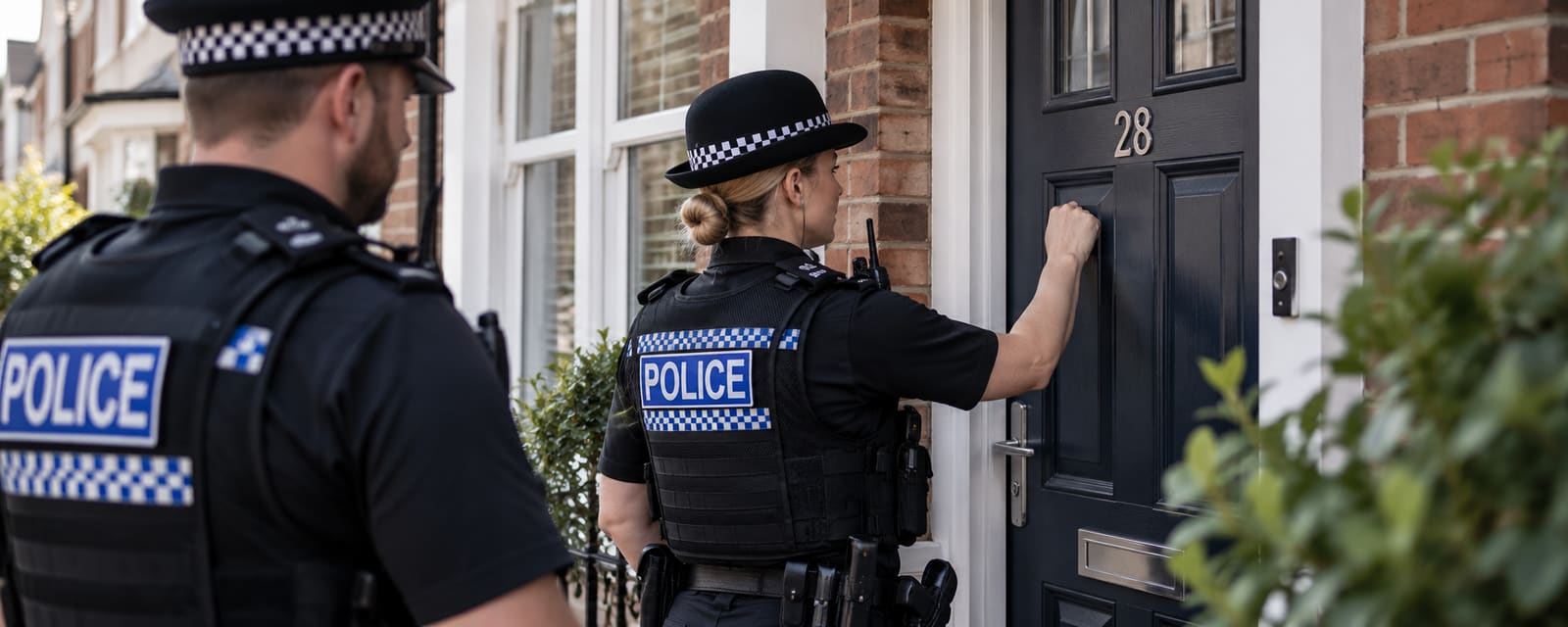
Is it legal to film or photograph police officers in England and Wales?
Key points
- It is generally legal to film police officers in public places in England and Wales
- There is no law specifically prohibiting the filming of police
- Section 58A of the Terrorism Act 2000 restricts filming that would be useful to terrorists, but this is very narrowly drawn
- Officers cannot lawfully order you to delete footage or hand over your device without proper legal authority
- Officers may ask you to move back for safety or scene-preservation reasons; comply with lawful directions but you need not stop recording
- Obstruction of an officer is a separate offence and should be avoided
- If police seize your device as evidence, ask for a receipt and seek legal advice
Filming the police in England and Wales is generally lawful. There is no specific legislation prohibiting members of the public from recording officers carrying out their duties in public places. Courts and the College of Policing have confirmed this position.
The right to film is not absolute. Section 58A of the Terrorism Act 2000 makes it an offence to collect or record information about members of the armed forces, intelligence services, or police officers if it is likely to be useful to a person committing or preparing an act of terrorism. However, this is a narrow provision targeted at terrorist reconnaissance, not ordinary journalistic or personal filming of officers.
Section 76 of the Counter-Terrorism Act 2008 creates an offence of eliciting, publishing, or communicating information about members of the armed forces, intelligence services, or police which is of a kind likely to be useful to a person committing or preparing an act of terrorism. This provision remains in force but is narrowly targeted at terrorist reconnaissance: it does not criminalise ordinary filming of police officers carrying out their duties. Officers who cite s.76 CTA 2008 as a general prohibition on filming are misapplying the provision.
Officers cannot require you to delete footage or hand over your device without lawful authority. If they seize your phone as evidence under their powers of seizure, you should receive a receipt and the material must be handled in accordance with the law. Simply filming lawfully does not give rise to a power of seizure.
If you are filming a police operation, officers may ask you to move back for reasons of safety or to preserve the scene. You should comply with a lawful direction to move but should not be required to stop filming entirely. In some circumstances officers may use section 35 of the Anti-social Behaviour, Crime and Policing Act 2014 to disperse people from an area, which could require you to move, but this does not require you to stop recording.
Key Points
- It is generally legal to film police officers in public places in England and Wales
- There is no law specifically prohibiting the filming of police
- Section 58A of the Terrorism Act 2000 restricts filming that would be useful to terrorists, but this is very narrowly drawn
- Officers cannot lawfully order you to delete footage or hand over your device without proper legal authority
- Officers may ask you to move back for safety or scene-preservation reasons; comply with lawful directions but you need not stop recording
- Obstruction of an officer is a separate offence and should be avoided
- If police seize your device as evidence, ask for a receipt and seek legal advice
Related guides
Last updated 6 October 2026