 Policing.uk
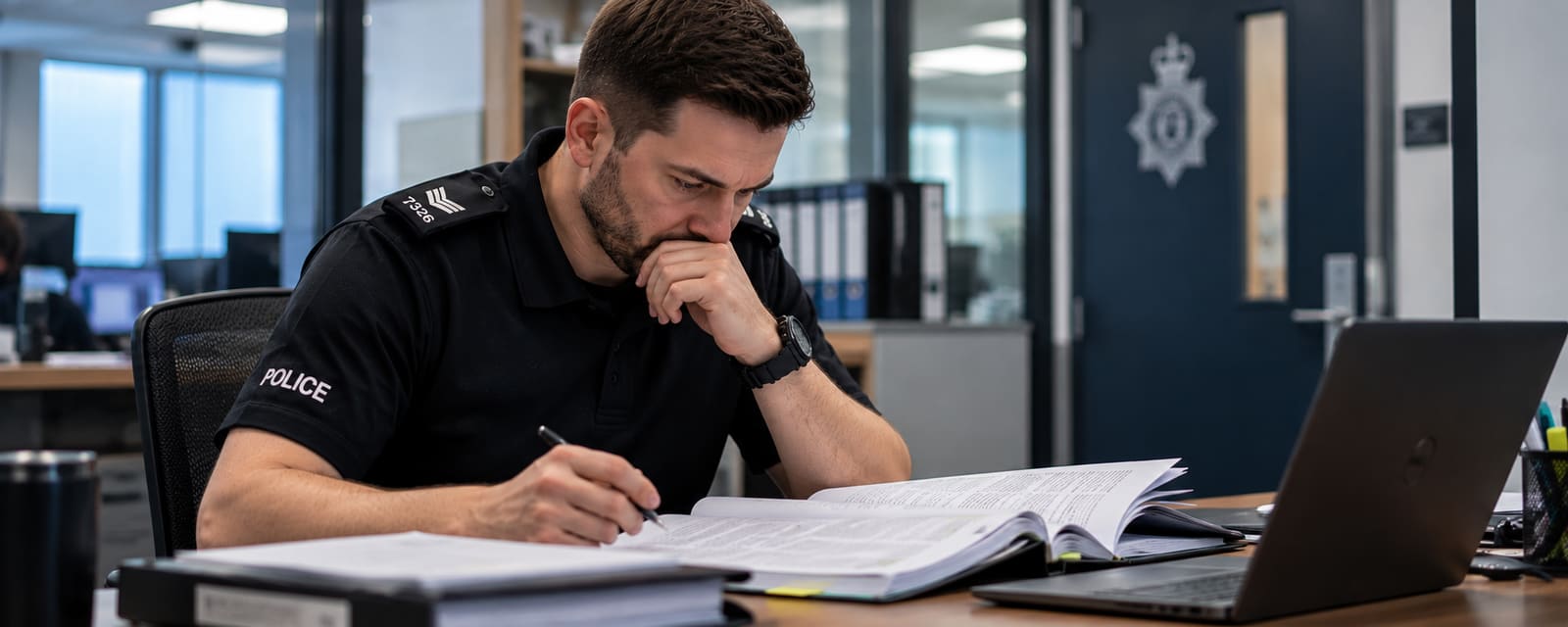
SHACKS
Saw, heard, actions, conversation, knowledge, smell, the prompt recruits use to write grounds for a search that meet Code A's reasonable suspicion test.
The expansion
- S: Saw
- H: Heard
- A: Actions
- C: Conversation
- K: Knowledge
- S: Smell
What it is for
SHACKS is a prompt for the grounds an officer writes on a stop and search record. Each letter is a source of fact, from what the officer saw to what they already knew from intelligence, so the grounds can be tested by someone who was not there.
This is training shorthand; no College of Policing or force document found on 19 October 2026 uses it. The rule it stands for is in PACE Code A.
Where it comes from
Section 1(3) of the Police and Criminal Evidence Act 1984 (Crown copyright, read 19 October 2026) gives no power to search "unless he has reasonable grounds for suspecting that he will find" the articles the section covers.
Code A (2023, in effect from 17 January 2023) explains it. Paragraph 2.2 gives the test two parts: a genuine suspicion in the officer's own mind, and "an objective basis for that suspicion based on facts, information and/or intelligence which are relevant to the likelihood that the object in question will be found". Officers "must therefore be able to explain the basis for their suspicion by reference to intelligence or information about, or some specific behaviour by, the person concerned".
Paragraph 2.6B allows suspicion to rest on behaviour alone, but the officer "must be able to explain, with reference to specific aspects of the person's behaviour or conduct which they have observed, why they formed that opinion". It ends: "A hunch or instinct which cannot be explained or justified to an objective observer can never amount to reasonable grounds."
Paragraph 2.9 lets an officer ask about the person's behaviour or presence before searching, and says the grounds "may be confirmed or, because of a satisfactory explanation, be dispelled".
Paragraph 4.3 lists what "The record of a search must always include": the date, time and place, the object of the search and, for powers requiring reasonable suspicion, "the grounds for that suspicion".
When it is used
Before any search under a power that needs reasonable suspicion, when the officer explains the grounds under paragraph 3.8, and when the record is written. Section 60 searches need no individual grounds, so SHACKS does not apply.
This page is educational information about how officers are trained.
Read on this site
Sources
Last updated 19 October 2026. Reviewed 19 October 2026