 Policing.uk
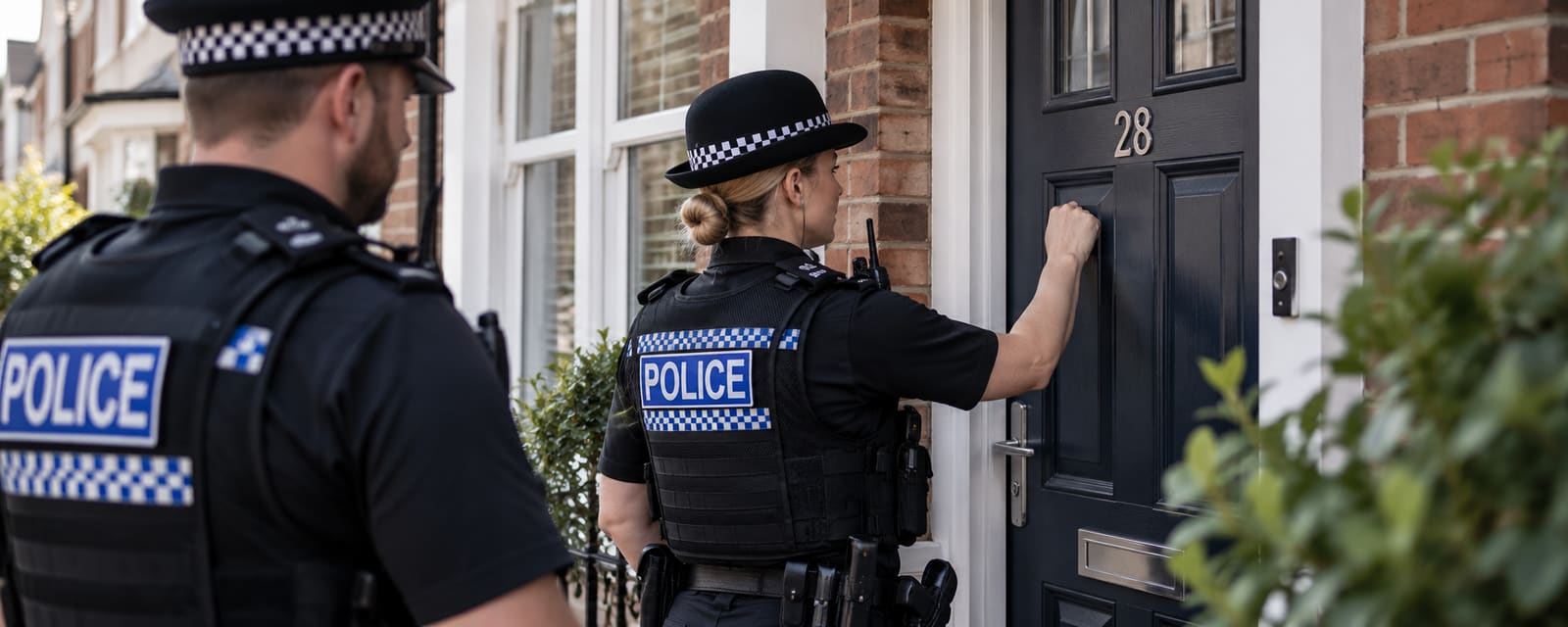
Is it illegal to have a knife in your car?
It can be. Under s.139 of the Criminal Justice Act 1988, it is an offence to have a bladed or sharply pointed article in a public place without good reason or lawful authority. A car on a public road is a public place. Having a knife for a legitimate purpose (e.g., work tools, fishing equipment) may provide a defence.
The law
- Criminal Justice Act 1988, Section 139. Offence to have a bladed or sharply pointed article in a public place without good reason. Max: 4 years' imprisonment.
- Prevention of Crime Act 1953, Section 1. Offence to carry an offensive weapon in a public place without lawful authority or reasonable excuse. Max: 4 years.
- Sentencing Act 2020, Section 315. Mandatory minimum 6 months for a second bladed article offence (adults), unless unjust.
The penalty
- Offence
- Possession of bladed article in public (s.139 CJA 1988)
- Maximum
- 4 years' imprisonment
- Typical range
- Community order to 12 months' custody (first offence); 6 months minimum (second offence)
What to do
- If you carry knives in your car for work, keep them in a secure, closed bag or toolbox in the boot.
- Be prepared to explain the purpose: "I am a carpet fitter travelling to a job" is a good reason; "for protection" is not.
- A folding pocket knife with a blade under 3 inches is exempt, but a lock knife is not.
- If stopped by police, be honest about what is in the vehicle.
- If charged, seek legal advice: the good reason defence requires specific evidence.
In detail
Section 139 of the Criminal Justice Act 1988 makes it an offence to have with you in a public place any article which has a blade or is sharply pointed, without good reason or lawful authority. A vehicle on a public road is considered a public place for the purposes of this section.
The offence carries a maximum of 4 years' imprisonment on indictment (increased from 2 years by the Criminal Justice and Courts Act 2015). On summary conviction, the maximum is 6 months' imprisonment and/or an unlimited fine.
There is an exception for folding pocket knives with a blade of 3 inches (7.62 cm) or less, which are not caught by s.139. However, a lock knife (one that locks into position when opened) is not a folding pocket knife for these purposes, as confirmed in Harris v DPP [1993].
The defence of "good reason" places the burden on the defendant: you must prove on the balance of probabilities that you had a good reason for having the knife. Examples of good reason include: carrying kitchen knives to a new home, transporting fishing equipment, carrying work tools for a specific job (e.g., carpet fitting, scaffolding). Simply saying "for self-defence" is not a good reason: R v Emmanuel [1998] confirmed that carrying a knife for self-defence is not a lawful purpose.
Separately, s.1 of the Prevention of Crime Act 1953 makes it an offence to carry an "offensive weapon" in a public place without lawful authority or reasonable excuse. A knife carried with the intention to cause injury would fall under this section, carrying a maximum of 4 years' imprisonment.
Police can search your vehicle under PACE s.1 if they have reasonable grounds to suspect it contains a bladed article or offensive weapon. The Offensive Weapons Act 2019 further tightened knife laws, creating offences relating to online sales and delivery of bladed articles.
For a second offence of possession of a bladed article (s.139 CJA 1988), there is a mandatory minimum sentence of 6 months' imprisonment for adults, unless there are particular circumstances that would make it unjust (s.315 Sentencing Act 2020).
Related questions
Last updated 16 October 2026