 Policing.uk
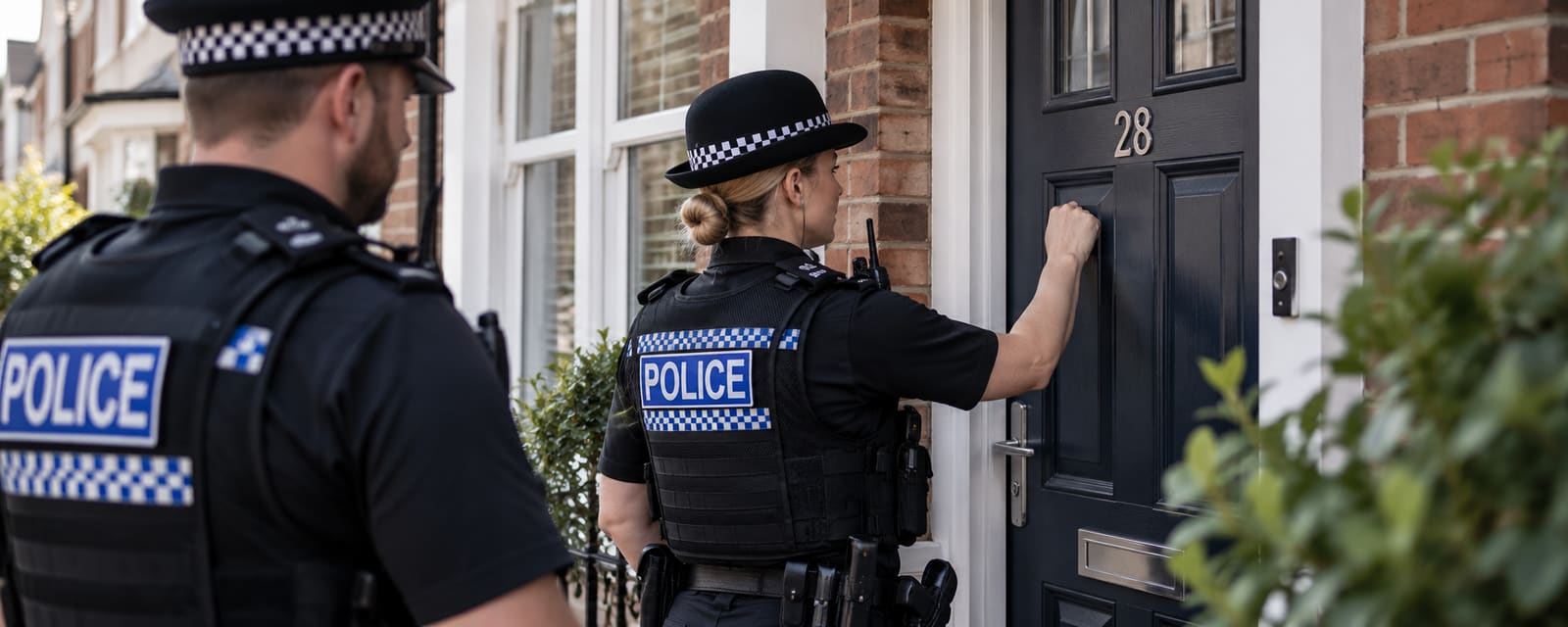
Can police detain you without charge in the UK?
Yes, but only for a limited time and subject to review. Under PACE 1984, police can detain a suspect for up to 24 hours without charge. Extensions are available in some cases, reaching up to 96 hours with magistrates' court authority for serious offences, and up to 14 days under terrorism legislation.
The law
- Police and Criminal Evidence Act 1984, Sections 34 to 44. Sets the framework for detention without charge: 24-hour basic period, superintendent extension to 36 hours, magistrates' court warrant to 96 hours maximum.
- Police and Criminal Evidence Act 1984, Sections 56 and 58. Rights on detention: right to have a person informed of arrest, right to consult a solicitor. These rights may be delayed in certain serious offence circumstances.
- Terrorism Act 2000, Schedule 8. Separate detention regime for terrorism suspects: up to 14 days total (reduced from 28 by Protection of Freedoms Act 2012 s.57), with extensions beyond 48 hours authorised by a judicial authority.
- Policing and Crime Act 2017, Sections 52 to 67. Regulates pre-charge bail: initial 28-day limit, with extension provisions and mandatory reviews.
What to do
- Ask the custody officer immediately when your detention was clocked in and what the current review schedule is.
- Request to speak to a solicitor as soon as possible: this is your right under s.58 PACE 1984 and cannot be delayed without specific lawful grounds.
- Keep track of the time: after 24 hours without superintendent authorisation, your detention is unlawful.
- If you believe you are being held beyond the permitted period, ask the custody officer to confirm the legal basis in writing.
- After release, if you believe your detention was unlawful, seek legal advice about a civil claim for false imprisonment.
In detail
When you are arrested and taken to a police station, the police have a limited period in which they must either charge you, release you, or apply for an extension of detention. This framework is set out in the Police and Criminal Evidence Act 1984 (PACE 1984), Part IV.
The basic detention period
The custody clock starts when you arrive at the police station (or when you were arrested if you were already there). The initial detention period is 24 hours. During this time, the custody officer must review whether your continued detention is necessary at six hours and then at nine-hour intervals.
Detention beyond 24 hours requires written authorisation from a superintendent or above. This officer must have reasonable grounds to believe that the investigation is being conducted diligently and expeditiously, and that further detention is necessary to secure or preserve evidence or to obtain evidence by questioning. This extends detention to a maximum of 36 hours.
Magistrates' court warrants
If the police need more time beyond 36 hours, they must apply to a magistrates' court for a warrant of further detention. The court can grant extensions up to a maximum of 96 hours total from the start of the custody clock. Detention beyond 36 hours without a court warrant is unlawful.
Terrorism suspects
The Terrorism Act 2000 and the Counter-Terrorism Act 2008 provide a separate regime for terrorism-related offences. Under Schedule 8 of the Terrorism Act 2000, detention up to 48 hours can be authorised by a superintendent. Beyond 48 hours, the police must apply to a judicial authority for extensions. The maximum is 14 days from arrest, reduced from 28 days by s.57 of the Protection of Freedoms Act 2012.
Your rights during detention
Throughout detention you have the right to have someone informed of your arrest (s.56 PACE 1984), the right to consult a solicitor privately (s.58 PACE 1984), and the right to consult the Codes of Practice. Delaying these rights is only permitted in specified circumstances involving serious offences. You also have the right to periodic review of your detention by the custody officer.
Breach of the custody clock
If the police exceed the permitted detention period without lawful authority, your detention becomes unlawful. Any evidence obtained during unlawful detention may be excluded at trial under s.78 PACE 1984. You may also have a civil claim for false imprisonment.
Charged, bailed, or released
At the end of the permitted period (if no extension is granted), you must be charged, released without bail, or released on bail. Pre-charge bail is governed by the Policing and Crime Act 2017, which introduced an initial 28-day limit that can be extended with superintendent authority or, for complex cases, with magistrates' court approval.
Related questions
Last updated 16 October 2026